
The honest version · 7 min read
Heavy, aching legs by dinnertime: what's actually going on down there, and what four old plants can and can't do about it
If your lower half ignores every diet that works everywhere else, the problem probably isn't the fat. It's the fluid sitting in it. An honest look at leg heaviness, from a supplement page that would rather treat you like an adult.
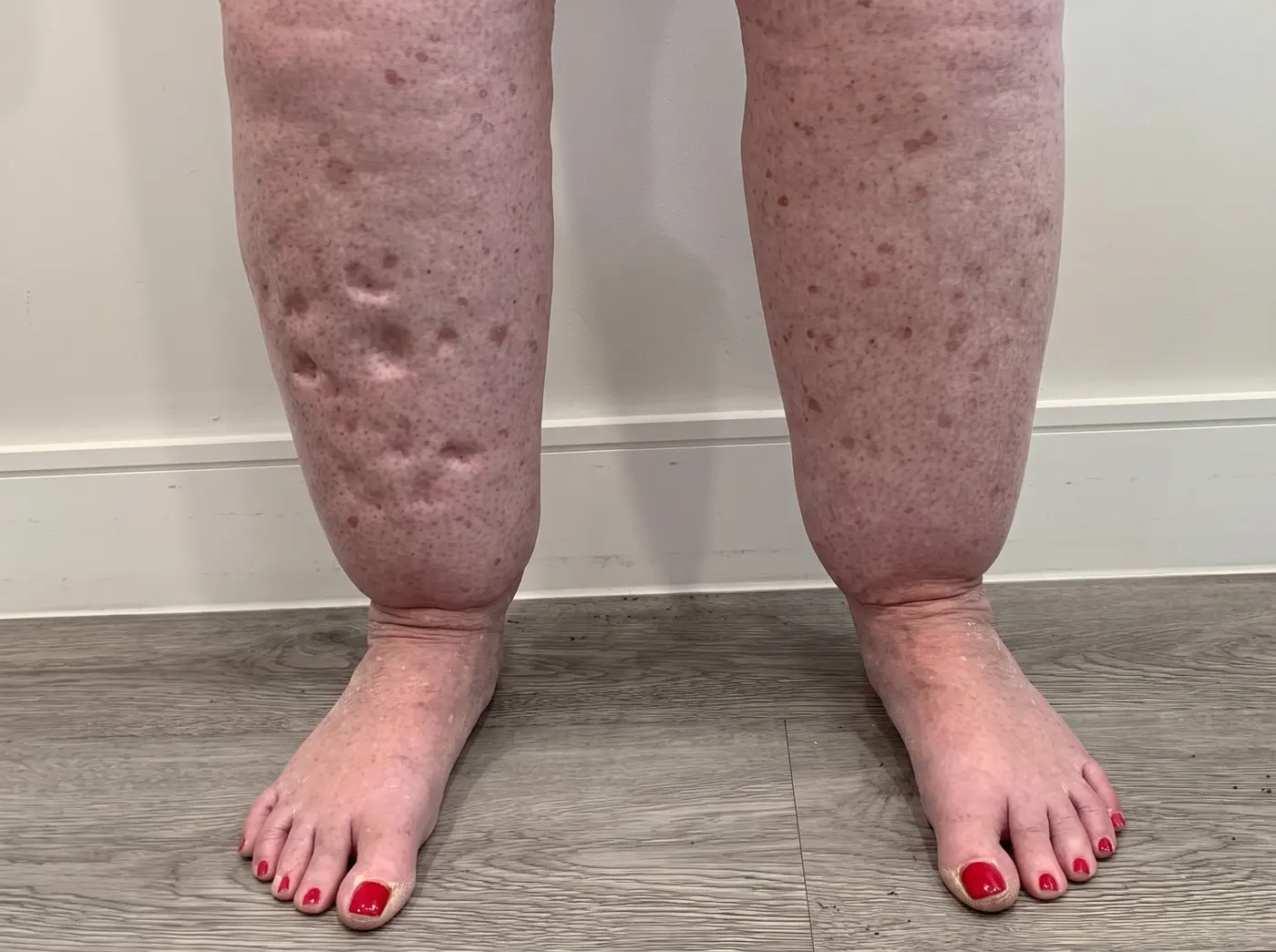
It's around six in the evening. You take your shoes off and the sock cuff has carved a ring into your ankle deep enough to hold a pencil. Your calves feel poured, not tired. Tired goes away when you sit down. This sits there with you.
You've done the salad months. The scale moved, your face thinned out, your rings got loose. Your legs didn't get the memo. Same jeans problem, same ankle line, same dull ache that turns "want to walk after dinner?" into a genuinely irritating question.
Here is the part almost nobody tells women straight: legs like that are usually not a willpower problem. They are a plumbing problem.
A quick gut check. How many of these sound familiar?
- Tender when someone squeezes your calf or thigh
- Bruises you can't remember earning
- Noticeably smaller on top than below the waist
- A sharp line at the ankle, as if the swelling stops at a border
- Evenings always worse than mornings
If you nodded more than twice, keep reading. This page was written for you.
Why the diet never reaches your legs
Fat below the waist behaves differently from fat around your middle. Any woman who has lost twenty pounds and kept her exact same legs already knows this, and hormone researchers have been describing it for decades: hormones decide where fat goes and how stubbornly it stays, and in many women the thighs, hips and calves are the last territory the body will negotiate.
The injections don't change that. Women on GLP-1 drugs describe the same pattern all over the forums: face, arms and belly deflate while the legs sit there unchanged. An appetite drug changes how much you eat. It has no opinion about what's pooling in your calves at 6 p.m.
Because a lot of what you feel at 6 p.m. isn't fat at all.
What's actually happening in there
Your legs are the lowest point of a very tall plumbing system. Pumping blood down is easy. Getting fluid back up is the hard part. Your veins do some of that work. The rest belongs to the lymphatic system, a slow return network that has no pump of its own. It moves when you move, and it falls behind when you sit, stand still, fly, or simply live a normal desk-shaped day.
When the return traffic falls behind, fluid parks in the tissue of your calves, ankles and thighs. That is the evening heaviness. That is the sock ring. It's also why mornings feel a little better: you spent eight hours horizontal and the drain finally caught up.
Let that repeat for years and the neighborhood changes. Tissue that sits in fluid becomes tender, bruises easily, and weighs more than it looks like it should.
One more thing, and it matters. There are medical conditions that live in this territory: chronic venous insufficiency, lymphedema, and lipedema. Lipedema is real, badly underdiagnosed, and often dismissed as "just weight". Fat below the waist becomes disproportionate, painful to the touch and largely immune to dieting, and it tends to flare at puberty, pregnancy or menopause. If the last few paragraphs read like your medical history, take that seriously and take it to a doctor who knows lipedema by name. A supplement page, this one included, is not where that story gets solved.
Four botanicals, two jobs
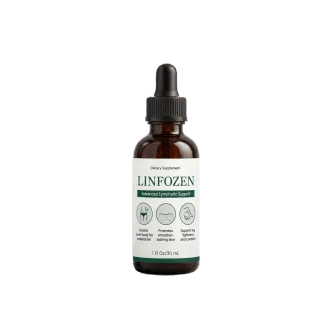
Linfozen is a liquid herbal extract built on four plants with a long record in European and North American herbalism. No secret molecules, no lost ancient methods. The label lists all four by name, and you can look every one of them up tonight. They split into the two jobs your legs need done.
Drainage side
Cleavers
Galium aparine, aerial parts
The classic lymphatic herb of European tradition, used for generations for fluid balance and that puffy, waterlogged feeling. It's the plant herbalists reach for first when the complaint is "swollen and sluggish".
Drainage side
Stillingia root
Stillingia sylvatica
"Queen's root" to the 19th-century Eclectic physicians, who put it in most blends aimed at lymphatic and glandular sluggishness. Supports the body's own drainage and clearing pathways.
Drainage side
Red clover blossom
Trifolium pratense, flower
A traditional cleansing botanical, studied for its isoflavones and other plant compounds. In this blend it backs up the drainage side, and it is the reason for one of the warnings further down.
Traffic side
Prickly ash bark
Zanthoxylum americanum
The "toothache tree" of North American herbalism, prized as a circulatory stimulant. It supports healthy circulation and internal movement, so the fluid the other three loosen has somewhere to go.
Why drops instead of capsules
Three reasons. A glycerin extract goes to work fast. A dropper is easier to stay consistent with than another handful of capsules. And the flavor is sweet honey, so nobody dreads it. Hold a dropper under the tongue for ten seconds, once a day. Consistency is the entire game here.
Supplement Facts, as printed on the label
| Serving size | 1 mL (about ¼ teaspoon) |
| Proprietary blend of extracts: Cleavers aerial parts, Red Clover flower, Stillingia root, Prickly Ash bark | 300 mg |
| Other ingredients | vegetable glycerin, water |
Daily Value not established. Transcribed from the producer's panel. A 1 fl oz (30 mL) bottle is about a month at one serving a day.

What Linfozen won't do
This is the section the miracle ads never include, which is exactly why it is here.
It will not dissolve fat. Nothing in a bottle does, and anyone who tells you otherwise is lying to you.
It will not treat lipedema, lymphedema or vein disease. Those are medical conditions. This is lymphatic support, not medicine, and if a page selling you drops claims to reverse a disease, close the tab.
It will not work by Friday. Fluid moves fairly quickly, so evenings often change first. The deeper heaviness took years to build and is slower to leave. The honest window is eight to twelve weeks of daily use, which is exactly why the guarantee runs sixty days instead of fourteen.